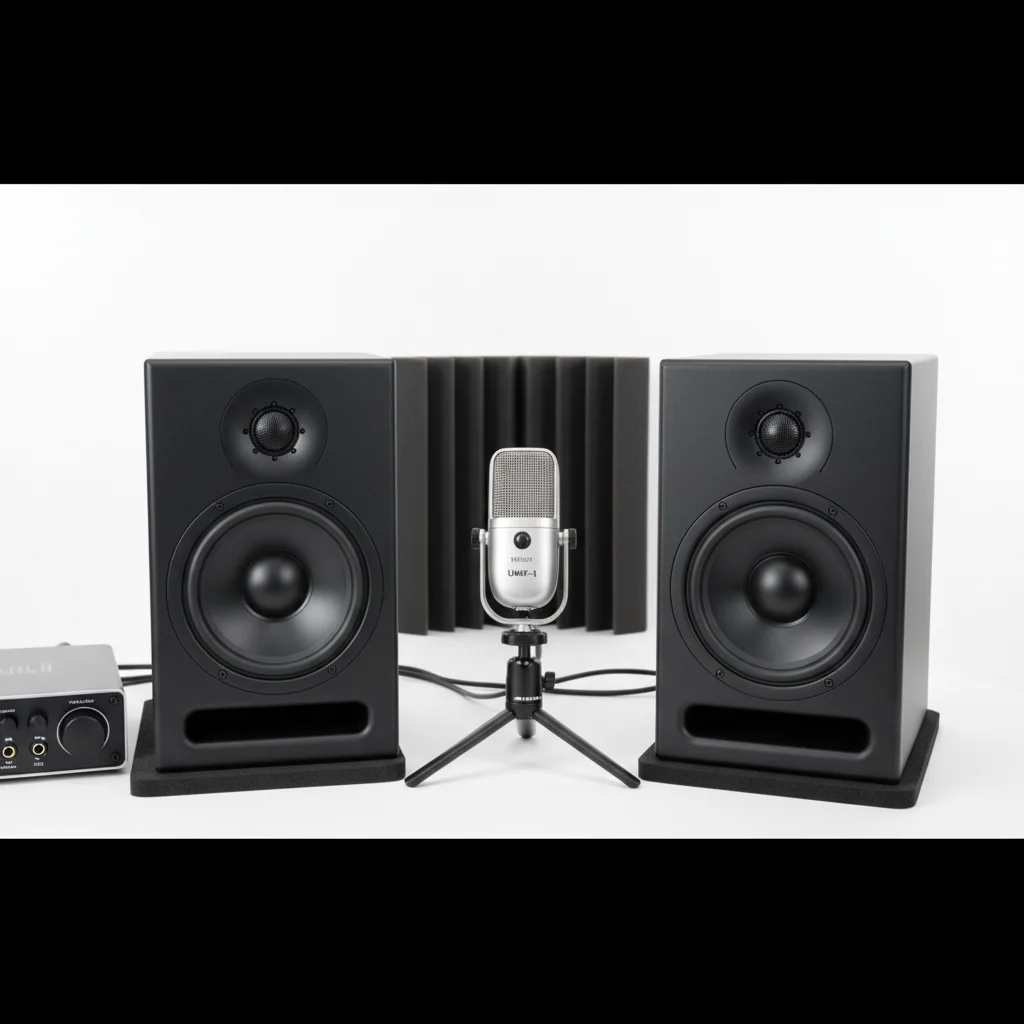
Studio monitor calibration is highly recommended for anyone serious about audio production, as it ensures accurate sound reproduction in your mixing and mastering environment. This process minimizes sound colorization by delivering a flat frequency response, allowing for informed decisions during mixing. Calibration typically involves using specialized software and a measurement microphone to analyze room acoustics and adjust monitors accordingly.
What is Studio Monitor Calibration?
Studio monitor calibration involves a series of measurements and adjustments to optimize the sound output of your studio monitors within your specific listening environment. Every room has unique acoustic properties that can affect how sound waves behave, causing peaks and dips in frequency response. Calibration aims to counteract these room anomalies, providing the most neutral and accurate sound possible from your speakers. This is essential for creating mixes that translate well across different playback systems.
Why is Calibration Important for Audio Production?
For audio engineers, producers, and musicians, accurate monitoring is paramount. Without it, mixing decisions might be based on an inaccurate representation of your audio. For example, if your room has a bass boost, you might inadvertently reduce the bass in your mix, making it sound thin on other systems. Calibration helps you hear your audio as it truly is, leading to better, more consistent mixes and masters. It’s an investment in the quality and reliability of your work.
The Tools You’ll Need for Calibration
|
Our Picks for the Best Studio Monitor in 2026
As an Amazon Associate I earn from qualifying purchases.
|
||
| Num | Product | Action |
|---|---|---|
| 1 | (2) JBL 305P MkII 5" 2-Way Active Powered Studio Reference Monitors Speakers |

|
| 2 | Yamaha HS3 Powered Studio Monitor in Black, Pair (HS3 B) |
|
| 3 | PreSonus Eris 3.5 Studio Monitors (White), Pair — 3.5" Inch Powered Bookshelf Speakers, Stereo, Desktop Computer, Near Field Music Production, Audio Mixing Recording |
|
| 4 | Yamaha HS4 Powered Studio Monitor in White, Pair (HS4 W) |
|
| 5 | Edifier R1280T Powered Bookshelf Speakers - 2.0 Active Near Field Studio Monitor Speaker - Wooden Enclosure - 42 Watts RMS Power |
|
| 6 | PreSonus Eris E4.5-2-Way 4.5" Near Field Studio Monitor (Pair) |
|
| 7 | Edifier MR4 Powered Studio Monitor Speakers, 4" Active Near-Field Monitor Speaker - White (Pair) |
|
| 8 | PreSonus Eris 3.5 Studio Monitors, Pair — Powered, Active Monitor Speakers for Near Field Music Production, Desktop Computer, Hi-Fi Audio |
|
| 9 | Mackie CR3.5 3.5" Creative Reference Powered Studio Monitors with Tone Knob and Location Switch — Active Speakers for Music Production, Desktop Computer, Gaming, HiFi Listening |
|
| 10 | PreSonus Eris E5 2-Way 5.25" Near Field Studio Monitor |
|
To effectively calibrate your studio monitors, you’ll need a few key pieces of equipment. The most important is a measurement microphone, designed to capture sound accurately across the frequency spectrum. You’ll also need calibration software, such as Sonarworks SoundID Reference or IK Multimedia ARC System, which analyzes the microphone’s input and generates correction profiles. Finally, an audio interface with phantom power for the microphone and a computer to run the software are necessary.
- Measurement microphone (e.g., Behringer ECM8000, MiniDSP UMIK-1)
- Calibration software (e.g., Sonarworks SoundID Reference, IK Multimedia ARC System)
- Audio interface with phantom power
- Computer with sufficient processing power
- Appropriate cabling (XLR for microphone, TRS/XLR for monitors)
The Calibration Process Explained
The calibration process typically begins by setting up your measurement microphone at your primary listening position. The software then plays a series of test tones through your studio monitors, which the microphone records. Based on these recordings, the software creates a detailed acoustic profile of your room and your monitors’ response. It then generates a correction filter that can be applied either within the software itself, through a dedicated hardware unit, or by loading it directly into compatible monitors. This filter compensates for room modes and frequency imbalances, resulting in a flatter, more accurate sound.
When Should You Calibrate Your Monitors?
It’s advisable to calibrate your studio monitors whenever you make significant changes to your listening environment, such as moving furniture, adding acoustic treatment, or even relocating your monitors. Even minor adjustments can impact the acoustic response of your room. For optimal accuracy, some professionals recommend re-calibrating every few months, or at least once a year, to account for any subtle shifts in your setup or room acoustics. Regular calibration ensures that your monitoring environment remains consistent and reliable over time.
Frequently Asked Questions
What is the primary purpose of studio monitor calibration?
The primary purpose of studio monitor calibration is to optimize the sound output of your studio monitors within your specific listening environment. It aims to counteract room anomalies and provide the most neutral and accurate sound possible from your speakers, which is essential for creating mixes that translate well across different playback systems.
What equipment is needed to calibrate studio monitors?
To calibrate studio monitors, you will need a measurement microphone, calibration software like Sonarworks SoundID Reference or IK Multimedia ARC System, an audio interface with phantom power, and a computer. Appropriate cabling, such as XLR for the microphone and TRS/XLR for monitors, is also necessary.
How often should studio monitors be recalibrated?
Studio monitors should be recalibrated whenever significant changes are made to the listening environment, such as moving furniture or adding acoustic treatment. For optimal accuracy, many professionals recommend re-calibrating every few months, or at least once a year, to account for subtle shifts in the setup or room acoustics.
Why is accurate monitoring crucial for audio production?
Accurate monitoring is crucial for audio production because it prevents making mixing decisions based on an inaccurate representation of your audio. Calibration helps audio engineers, producers, and musicians hear their audio as it truly is, leading to better, more consistent mixes and masters that translate well across different playback systems.
What does the calibration process involve?
The calibration process involves setting up a measurement microphone at the listening position, playing test tones through the monitors, and recording them with the microphone. The software then creates an acoustic profile and generates a correction filter to compensate for room modes and frequency imbalances, resulting in a flatter, more accurate sound.
Calibrate Your Studio Monitors for Accurate Sound
Calibrating your studio monitors ensures a flat frequency response and accurate sound reproduction in your mixing environment. This process involves using specialized tools to analyze your room's acoustics and adjust your monitors.
Collect a measurement microphone (e.g., Behringer ECM8000), calibration software (e.g., Sonarworks SoundID Reference), an audio interface with phantom power, a computer, and appropriate cabling. Ensure all components are compatible and ready for setup.
Position your measurement microphone at your primary listening position, typically at ear height and equidistant from both monitors. Connect the microphone to your audio interface using an XLR cable, ensuring phantom power is enabled.
Launch your chosen calibration software on your computer. Follow the software's instructions to play a series of test tones through your studio monitors. The microphone will record these tones, allowing the software to analyze your room's acoustic profile and the monitors' response.
Based on the analysis, the software will generate a correction filter. Apply this filter either directly within the software, through a dedicated hardware unit, or by loading it into compatible monitors. This filter compensates for room modes and frequency imbalances, providing a flatter, more accurate sound.
After applying the filter, listen to familiar reference tracks to verify the improved sound accuracy. Re-calibrate your monitors whenever you make significant changes to your listening environment or at least once a year to maintain optimal performance and consistency.

I tried to calibrate my monitors using a free software and a cheap mic, and while it did make some difference, I’m not sure it was a huge improvement. I still feel like there are some peaks and dips in the frequency response that weren’t fully addressed. Maybe I need to invest in better equipment for the measurement part. It’s a good concept, but the execution can be tricky for beginners.
This really helped me understand why my mixes weren’t translating well. I always thought my monitors were the problem, but it was my room’s unique acoustic properties messing things up. The idea of achieving a flat frequency response is something I’ve chased for ages. Now, with proper calibration, my sound is so much more neutral and accurate. Highly recommend taking the time to do this.
I’ve been producing for years and always just relied on my ears. Decided to finally try calibrating my monitors after reading about how room acoustics can affect sound. The process was a bit more involved than I expected, but the results are worth it. My mixes are translating much better to other systems now, and I’m making more informed decisions during mixing. Wish I’d done this sooner!
I was skeptical about how much of a difference calibration would make, but wow. My mixes used to sound muddy in my home studio, and I always struggled with the low end translating. After using the specialized software and a measurement microphone, my monitors sound incredibly balanced. It’s like I’m hearing my tracks for the first time with true clarity. Definitely a game-changer for anyone serious about their audio production.