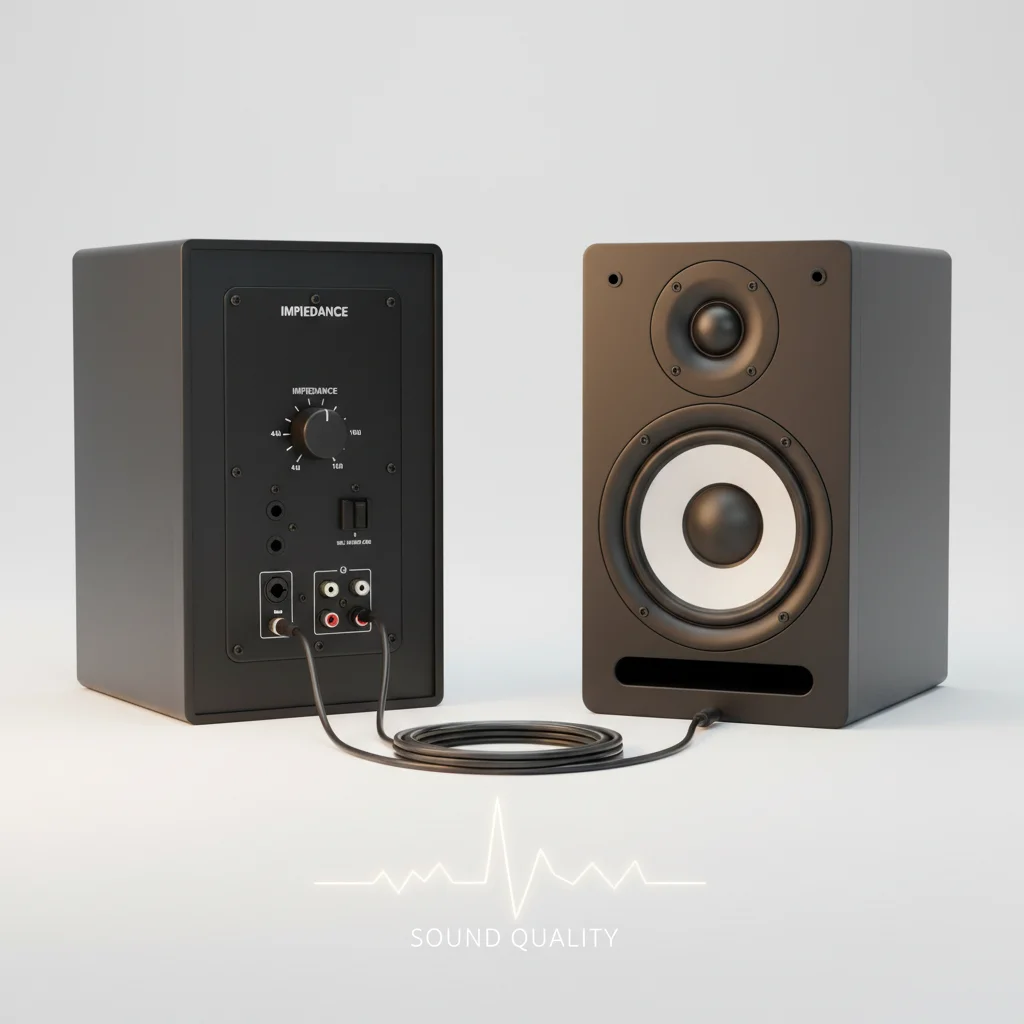
Studio monitor impedance plays a crucial role in sound quality, primarily by influencing the power transfer from your amplifier or audio interface to the speakers. While it doesn’t directly alter the frequency response of the monitor itself, an impedance mismatch can lead to several audible issues, including reduced volume, distortion, and even potential damage to your equipment. Understanding the relationship between amplifier output impedance and speaker input impedance is key to achieving optimal audio performance.
Understanding Impedance in Audio Systems
Impedance, measured in ohms (Ω), is the total opposition a circuit presents to the flow of alternating current. In the context of studio monitors, it refers to the electrical resistance of the speaker’s voice coil. Most passive studio monitors are rated at 4, 8, or 16 ohms. Active studio monitors, which have built-in amplifiers, typically present a high input impedance to the source, simplifying the connection process. For more studio monitor guides on this site.
The Impact of Impedance Mismatch
An impedance mismatch occurs when the output impedance of your amplifier or audio interface doesn’t align correctly with the input impedance of your passive studio monitors. If the amplifier’s output impedance is significantly higher than the speaker’s input impedance, it can lead to power loss, resulting in lower volume and a less dynamic sound. Conversely, if the speaker’s impedance is too low for the amplifier, it can draw excessive current, causing the amplifier to overheat, clip, or even fail. This is why it’s vital to check the specifications of both your amplifier and monitors.
Active vs. Passive Studio Monitors and Impedance
|
Our Picks for the Best Studio Monitor in 2026
As an Amazon Associate I earn from qualifying purchases.
|
||
| Num | Product | Action |
|---|---|---|
| 1 | PreSonus Eris E4.5-2-Way 4.5" Near Field Studio Monitor (Pair) |

|
| 2 | Mackie CR3.5 3.5" Creative Reference Powered Studio Monitors with Tone Knob and Location Switch — Active Speakers for Music Production, Desktop Computer, Gaming, HiFi Listening |
|
| 3 | Edifier R1280T Powered Bookshelf Speakers - 2.0 Active Near Field Studio Monitor Speaker - Wooden Enclosure - 42 Watts RMS Power |
|
| 4 | PreSonus Eris E5 2-Way 5.25" Near Field Studio Monitor |
|
| 5 | Yamaha HS3 Powered Studio Monitor in Black, Pair (HS3 B) |
|
| 6 | Yamaha HS4 Powered Studio Monitor in White, Pair (HS4 W) |
|
| 7 | PreSonus Eris 3.5 Studio Monitors (White), Pair — 3.5" Inch Powered Bookshelf Speakers, Stereo, Desktop Computer, Near Field Music Production, Audio Mixing Recording |
|
| 8 | (2) JBL 305P MkII 5" 2-Way Active Powered Studio Reference Monitors Speakers |
|
| 9 | Edifier MR4 Powered Studio Monitor Speakers, 4" Active Near-Field Monitor Speaker - White (Pair) |
|
| 10 | PreSonus Eris 3.5 Studio Monitors, Pair — Powered, Active Monitor Speakers for Near Field Music Production, Desktop Computer, Hi-Fi Audio |
|
Active studio monitors largely bypass the complexities of impedance matching for the end-user. Since the amplifier is integrated within the speaker enclosure, the manufacturer has already optimized the impedance relationship between the internal amplifier and the speaker drivers. This plug-and-play convenience is a major reason for their popularity in home and project studios. Passive monitors, however, require careful consideration of the external amplifier’s specifications to ensure a proper match.
Connecting Passive Monitors Correctly
When connecting passive studio monitors, always refer to the manufacturer’s recommendations for both your amplifier and speakers. Generally, an amplifier should be able to safely drive speakers with an impedance equal to or higher than its rated output. For example, an amplifier rated for 8-ohm speakers can typically drive 8-ohm or 16-ohm speakers, but connecting 4-ohm speakers might put undue strain on the amplifier. It’s also important to consider the amplifier’s power output (wattage) in relation to the speaker’s power handling capabilities.
- Always match amplifier output impedance to speaker input impedance.
- Avoid connecting speakers with an impedance lower than the amplifier’s minimum rating.
- Use high-quality speaker cables to minimize signal loss.
- Consult both amplifier and monitor manuals for specific impedance recommendations.
- Consider the amplifier’s power output (watts) in conjunction with impedance.
The Role of Cables and Connectors
While the primary impedance concern lies between the amplifier and the speaker, the quality and length of your speaker cables can also have a minor impact. Longer or thinner cables can introduce a small amount of resistance, which can slightly alter the effective impedance seen by the amplifier. For most home studio setups, standard gauge speaker wire is sufficient, but for very long runs or high-power systems, heavier gauge wire is recommended to minimize signal degradation.Ensuring secure connections at both the amplifier and speaker terminals also prevents additional resistance and potential signal loss.
When to Seek Professional Advice
If you’re unsure about impedance matching or are experiencing persistent audio issues with your passive studio monitor setup, it’s always best to consult with an audio professional. They can help you diagnose problems, recommend appropriate equipment, and ensure your system is configured for optimal performance and longevity. Investing in the right components and understanding their interactions will significantly enhance your listening experience and protect your gear.

I appreciate the detailed explanation of ohms and how they relate to speaker resistance. My main issue is still getting enough volume out of my 16-ohm monitors without pushing my amp too hard. While the information on avoiding damage is good, I was hoping for a bit more practical advice on how to boost volume effectively with higher impedance speakers without buying all new gear.
I always wondered why my old setup sounded a bit weak, even with decent monitors. This explanation about impedance mismatch and power transfer really cleared things up. Switched to an interface that better matches my 8-ohm passive monitors, and the difference in clarity and volume is night and day. No more distortion at higher levels either. Great info!
This really helped me troubleshoot some subtle distortion I was getting. I thought it was just my room acoustics, but after reading about the potential for reduced volume and distortion from an impedance mismatch, I checked my setup. Turns out my interface wasn’t quite up to par for my 4-ohm monitors. A simple upgrade made a huge improvement in my mixes.
The breakdown of how impedance affects active vs. passive monitors was super helpful. I’ve got active monitors, so I don’t have to worry as much about matching, but it’s good to understand the underlying principles. It’s easy to overlook these technical details when you’re just focused on the sound, but they really do make a difference in a home studio.