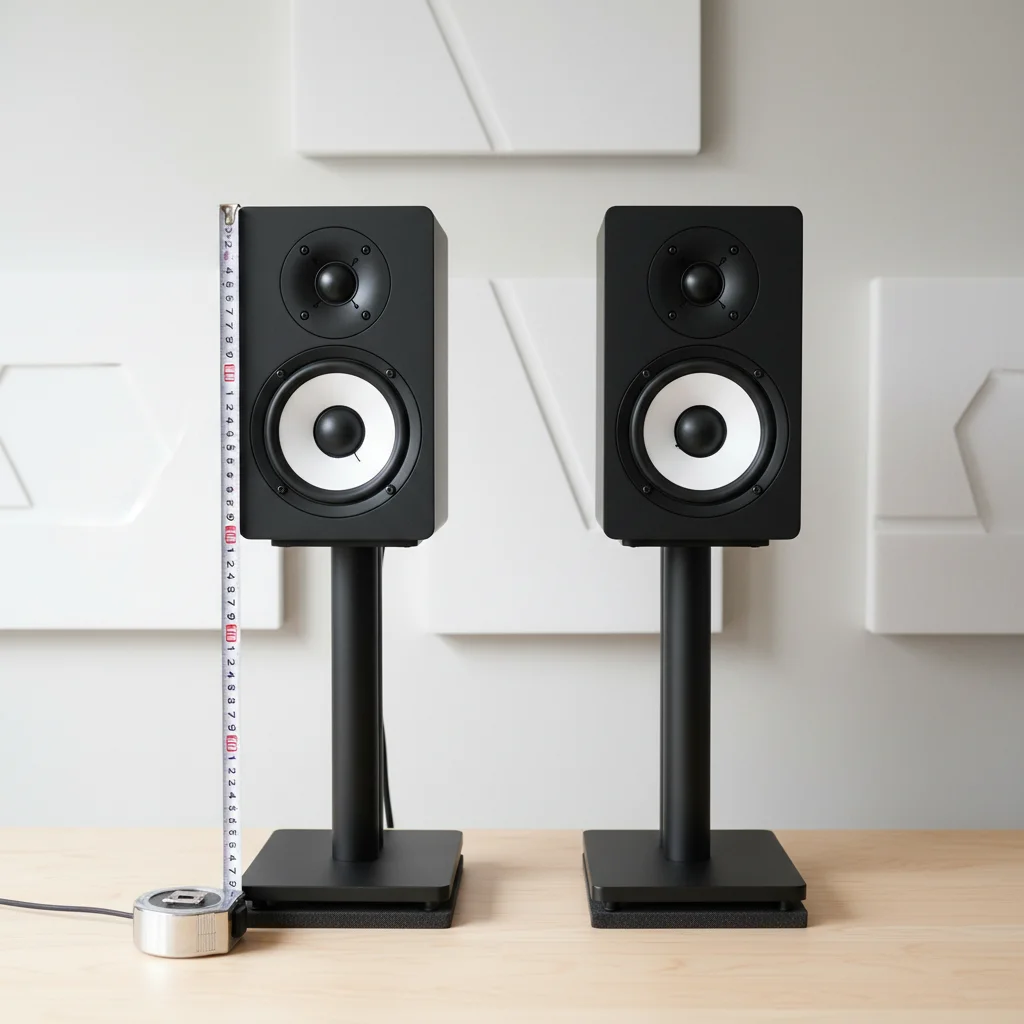
Optimal studio monitor placement is crucial for accurate sound reproduction, and a key factor often overlooked is their height. For most home and project studios, your studio monitors should be positioned so that the tweeters are at ear level when you are in your primary listening position. This ensures that the high frequencies, which are more directional, reach your ears directly, providing the most accurate stereo imaging and frequency response.
Why Ear-Level Tweeters Matter for Accuracy
The design of studio monitors, particularly their tweeters, dictates that they perform best when aimed directly at the listener’s ears. High frequencies tend to be more directional than lower frequencies. If tweeters are too high or too low, these critical high-frequency details can be lost or distorted due to reflections off your desk or ceiling, leading to an inaccurate representation of your mix. Achieving ear-level placement minimizes these unwanted reflections and ensures you hear the sound as intended by the monitor’s designers. For explore our studio monitor reviews on this site.
Setting Up Your Listening Triangle
Beyond height, proper studio monitor placement involves creating an equilateral listening triangle. This means your head and the two monitors should form the points of an equilateral triangle. The distance between your two monitors should be roughly the same as the distance from each monitor to your head. Once this triangle is established, adjust the height so the tweeters align with your ears. This setup provides the widest sweet spot and the most accurate stereo image.
Tools and Techniques for Achieving Optimal Height
|
Our Picks for the Best Studio Monitor in 2026
As an Amazon Associate I earn from qualifying purchases.
|
||
| Num | Product | Action |
|---|---|---|
| 1 | PreSonus Eris E5 2-Way 5.25" Near Field Studio Monitor |

|
| 2 | PreSonus Eris 3.5 Studio Monitors, Pair — Powered, Active Monitor Speakers for Near Field Music Production, Desktop Computer, Hi-Fi Audio |
|
| 3 | PreSonus Eris 3.5 Studio Monitors (White), Pair — 3.5" Inch Powered Bookshelf Speakers, Stereo, Desktop Computer, Near Field Music Production, Audio Mixing Recording |
|
| 4 | (2) JBL 305P MkII 5" 2-Way Active Powered Studio Reference Monitors Speakers |
|
| 5 | Yamaha HS4 Powered Studio Monitor in White, Pair (HS4 W) |
|
| 6 | Edifier MR4 Powered Studio Monitor Speakers, 4" Active Near-Field Monitor Speaker - White (Pair) |
|
| 7 | Mackie CR3.5 3.5" Creative Reference Powered Studio Monitors with Tone Knob and Location Switch — Active Speakers for Music Production, Desktop Computer, Gaming, HiFi Listening |
|
| 8 | PreSonus Eris E4.5-2-Way 4.5" Near Field Studio Monitor (Pair) |
|
| 9 | Edifier R1280T Powered Bookshelf Speakers - 2.0 Active Near Field Studio Monitor Speaker - Wooden Enclosure - 42 Watts RMS Power |
|
| 10 | Yamaha HS3 Powered Studio Monitor in Black, Pair (HS3 B) |
|
There are several effective ways to achieve the correct monitor height. Dedicated studio monitor stands are often the best solution, offering adjustable height and isolation. Alternatively, desktop isolation pads or risers can elevate monitors on your desk. When using stands, ensure they are stable and don’t introduce unwanted vibrations. For desktop setups, consider the angle of your monitors; many isolation pads allow for slight tilting to direct the sound upwards or downwards if perfect ear-level height isn’t achievable with a flat surface.
- Use adjustable studio monitor stands for maximum flexibility.
- Employ acoustic isolation pads to decouple monitors from surfaces.
- Measure from your ear to the floor while seated to determine target tweeter height.
- Consider foam wedges or risers for minor height adjustments on desktops.
- Ensure monitors are stable and secure at their chosen height.
Common Mistakes to Avoid
A common mistake is placing monitors directly on a desk without any isolation or height adjustment. This can lead to vibrations transferring to the desk, muddying the low end, and an inaccurate frequency response if the tweeters aren’t at ear level. Another error is placing monitors too close to walls, which can cause bass buildup and an uneven frequency response. Always aim for at least 6-12 inches of space between the back of your monitors and the wall, especially if they have rear-firing bass ports.
The Impact of Room Acoustics on Monitor Height
While ear-level tweeter placement is a general rule, room acoustics can influence the final fine-tuning. In rooms with significant reflections, slight adjustments to monitor height or angle might be necessary to minimize problematic reflections. Experimentation is key; listen to familiar reference tracks and adjust the height incrementally until the stereo image is clear, and the frequency balance sounds natural and uncolored. Remember that even small changes can have a noticeable impact on your perception of the sound.

I get the ear-level tweeter concept, and it definitely makes sense for accuracy. My only issue is that my desk setup makes it really hard to get them perfectly at ear height without buying new stands, which isn’t in the budget right now. I’ve tried tilting them, but it’s not quite the same. Good info, just a bit challenging to implement perfectly without extra gear.
I always just put my monitors on my desk, but after reading about the importance of ear-level tweeters, I finally invested in some stands. What a difference! My mixes sound so much clearer now, especially the high-end details. It’s like I’m hearing my tracks for the first time.
I’ve been struggling with my mixes sounding muddy, and I couldn’t figure out why. Turns out, my monitors were too low, causing reflections off my desk. Raising them up to ear level as suggested completely cleaned up the sound. It’s amazing how much of a difference proper studio monitor placement makes for home production.
This guide really helped me understand why my mixes felt off. I had my monitors way too high, thinking it would give me a better soundstage. Adjusting them so the tweeters are at ear level made a noticeable improvement in the stereo imaging. Still tweaking my room acoustics, but this was a huge step.