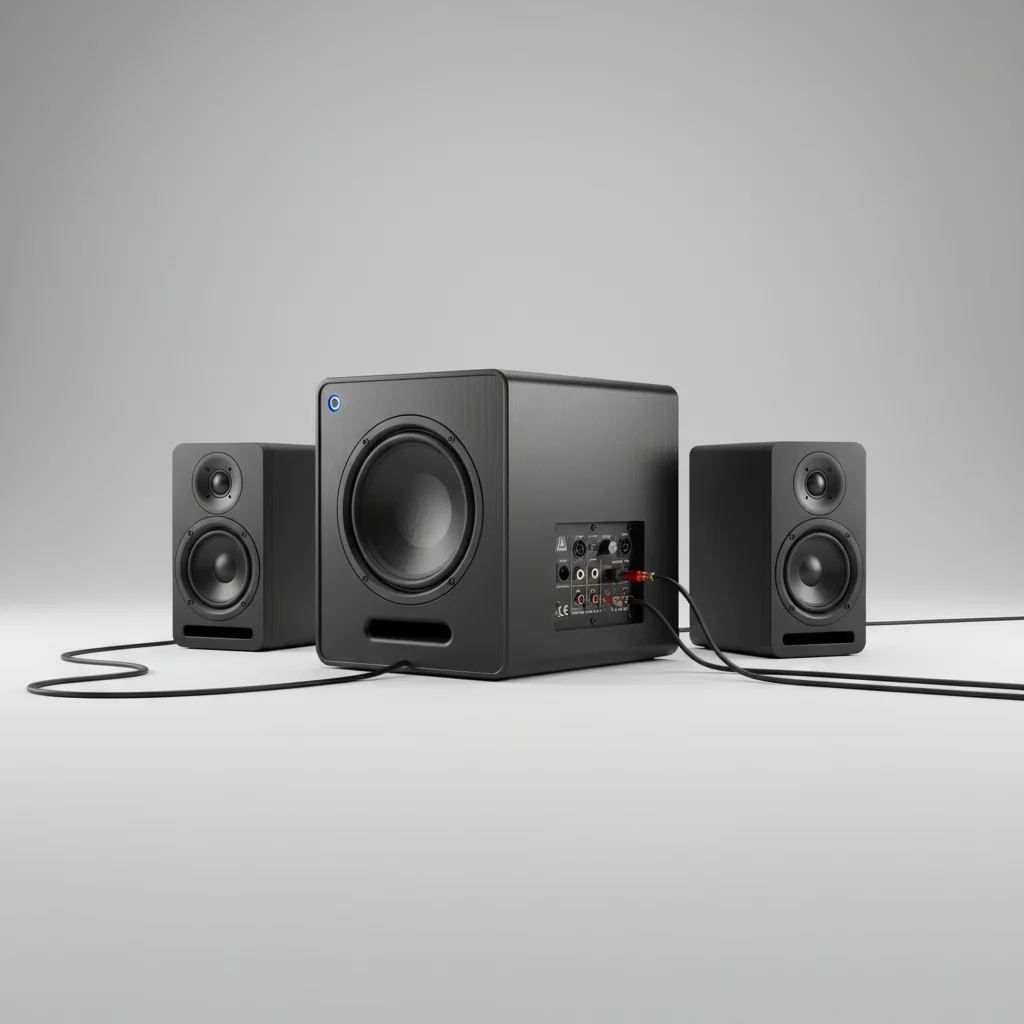
A studio monitor subwoofer can significantly enhance the accuracy of your bass response, especially in smaller rooms or with monitors that have limited low-frequency extension. While not strictly essential for all setups, a subwoofer becomes crucial for critical listening and mixing genres with prominent bass, such as EDM, hip-hop, or film scores. It helps to reproduce frequencies below 80 Hz more clearly and with greater impact, revealing details that smaller monitors might miss.
Why Consider a Studio Monitor Subwoofer?
Many studio monitors, particularly those with 5-inch or 6.5-inch woofers, struggle to accurately reproduce frequencies below 50-60 Hz. This can lead to an incomplete picture of your mix’s low end, resulting in mixes that sound thin or boomy on other playback systems. A dedicated studio monitor subwoofer extends your system’s frequency response down to 20-30 Hz, providing a full-range sound that is vital for making informed mixing decisions. It also allows your main monitors to focus on the mid-range and high frequencies, potentially improving their clarity and reducing distortion. For expert studio monitor reviews on this site.
Integrating a Subwoofer into Your Setup
Proper integration of a studio monitor subwoofer is key to achieving a balanced sound. This involves setting the crossover frequency, phase, and level correctly. The crossover frequency determines where the subwoofer takes over from your main monitors, typically between 80 Hz and 120 Hz. Matching the phase ensures that the subwoofer’s output aligns with your monitors, preventing phase cancellations or boosts. Finally, adjusting the level ensures the subwoofer doesn’t overpower your main speakers, maintaining a cohesive soundstage. Many subwoofers include built-in controls for these adjustments, and some even offer room correction features.
Benefits of a Well-Integrated Subwoofer
|
Our Picks for the Best Studio Monitor in 2026
As an Amazon Associate I earn from qualifying purchases.
|
||
| Num | Product | Action |
|---|---|---|
| 1 | PreSonus Eris E5 2-Way 5.25" Near Field Studio Monitor |

|
| 2 | Yamaha HS4 Powered Studio Monitor in White, Pair (HS4 W) |
|
| 3 | PreSonus Eris 3.5 Studio Monitors, Pair — Powered, Active Monitor Speakers for Near Field Music Production, Desktop Computer, Hi-Fi Audio |
|
| 4 | (2) JBL 305P MkII 5" 2-Way Active Powered Studio Reference Monitors Speakers |
|
| 5 | PreSonus Eris 3.5 Studio Monitors (White), Pair — 3.5" Inch Powered Bookshelf Speakers, Stereo, Desktop Computer, Near Field Music Production, Audio Mixing Recording |
|
| 6 | Edifier MR4 Powered Studio Monitor Speakers, 4" Active Near-Field Monitor Speaker - White (Pair) |
|
| 7 | Mackie CR3.5 3.5" Creative Reference Powered Studio Monitors with Tone Knob and Location Switch — Active Speakers for Music Production, Desktop Computer, Gaming, HiFi Listening |
|
| 8 | PreSonus Eris E4.5-2-Way 4.5" Near Field Studio Monitor (Pair) |
|
| 9 | Yamaha HS3 Powered Studio Monitor in Black, Pair (HS3 B) |
|
| 10 | Edifier R1280T Powered Bookshelf Speakers - 2.0 Active Near Field Studio Monitor Speaker - Wooden Enclosure - 42 Watts RMS Power |
|
The primary benefit of a well-integrated studio monitor subwoofer is a more accurate and extended low-frequency response. This translates to better translation of your mixes across different systems, as you’ll be able to hear and address issues in the bass range that would otherwise go unnoticed. It also reduces the strain on your main monitors, allowing them to operate more efficiently and with less distortion. For producers working with bass-heavy music, a subwoofer is almost indispensable for achieving professional-sounding results. It provides the necessary foundation for a powerful and clear low end.
When a Subwoofer Might Not Be Necessary
While beneficial, a studio monitor subwoofer isn’t always a requirement. If you primarily work on acoustic music, podcasts, or genres that don’t rely heavily on deep bass, your existing monitors might suffice. Additionally, if you have very large studio monitors with 8-inch or larger woofers that already provide excellent low-frequency extension, a subwoofer might be redundant. Room acoustics also play a significant role; in untreated rooms, adding a subwoofer can sometimes exacerbate bass issues rather than solve them. Always consider your specific needs, room, and existing equipment before investing in a subwoofer.
- Improved low-frequency accuracy and extension.
- Reduced strain on main studio monitors.
- Better translation of bass-heavy mixes.
- Enhanced detail in the sub-bass range.
- More immersive listening experience for certain genres.
Choosing the Right Studio Monitor Subwoofer
When selecting a studio monitor subwoofer, consider its size, power, and connectivity options. The size of the driver (typically 8-inch to 12-inch) will influence its low-frequency capabilities and output. The power rating should be sufficient to complement your main monitors without being underpowered or overpowering. Look for subwoofers with flexible crossover controls, phase adjustment, and balanced inputs/outputs for seamless integration with your audio interface or monitor controller. Reading reviews and comparing specifications will help you find a subwoofer that best suits your studio environment and budget.
