Active studio monitors are specialized loudspeakers with built-in amplifiers, making them the prevalent choice for modern audio production due to their optimized performance, simplicity, and advanced crossovers. Unlike consumer speakers, studio monitors aim for an unvarnished truth in sound reproduction, presenting audio exactly as it is to ensure mixes translate perfectly across various playback systems. This guide highlights the top active studio monitors available, helping producers find the ideal match for their needs and budget.
What Are Studio Monitors?
At its core, a studio monitor is a specialized loudspeaker engineered for critical listening in audio production environments. The fundamental distinction between a studio monitor and a conventional hi-fi or consumer speaker lies in its design philosophy. While consumer speakers are often designed with an enhanced or “hyped” frequency response to make music sound more pleasing to the average listener, studio monitors are built for neutrality. They strive for a flat frequency response, meaning they reproduce all frequencies—from deep bass to sparkling highs—at the same relative level, without boosting or cutting any specific range.
This uncolored sound is vital for music production because it allows engineers to hear their mix precisely as it is, revealing any imbalances, harsh frequencies, or missing details that might otherwise be masked by a “flattering” consumer speaker. Such accuracy enables producers to make precise adjustments, ensuring that a mix created in the studio will sound consistent and professional when played back on any other system. Without accurate monitoring, you might create a mix that sounds great in your studio but falls apart elsewhere, leading to frustrating revisions and compromised artistic vision. For studio monitor buying guides on this site.
Types of Studio Monitor Speakers
Studio monitors come in various configurations, each offering unique advantages depending on your studio size, budget, and specific production needs. Understanding these types is crucial for making an informed decision.
Active Studio Monitors
Active studio monitors are the prevalent choice in modern studios, from home setups to professional facilities. These speakers have built-in amplifiers matched precisely to their drivers (woofers, tweeters, and sometimes mid-range drivers). This integrated design offers several key benefits:
- Optimized Performance: The amplifiers are specifically designed and tuned for the speaker components, ensuring optimal power delivery and a seamless frequency response.
- Simplicity: With the amplifier integrated, you have fewer cables and components to manage, making setup straightforward and reducing potential signal chain issues.
- Portability: While some active monitors can be heavy, the all-in-one design means less gear to transport for mobile setups.
- Advanced Crossovers: Active crossovers, which split the audio signal into different frequency bands before amplification, can be more precise and intricate than passive ones, often incorporating DSP for room correction.
The primary disadvantage is that if an amplifier fails, the entire unit may need servicing, and you can’t easily swap out amplifiers to experiment with different sonic characteristics.
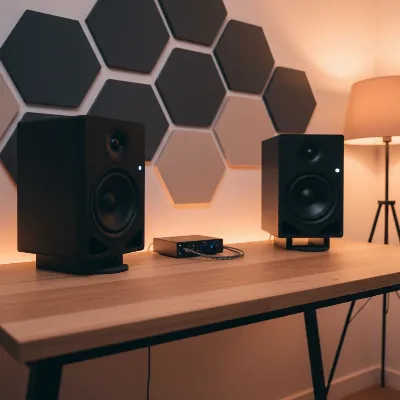 A pair of sleek, black active studio monitors positioned on a desk in a modern home studio, forming an equilateral triangle with a person's head for optimal listening. The room has subtle acoustic panels on the walls.
Passive Studio Monitors
|
Our Picks for the Best Studio Monitor in 2026
As an Amazon Associate I earn from qualifying purchases.
|
||
| Num | Product | Action |
|---|---|---|
| 1 | Edifier MR4 Powered Studio Monitor Speakers, 4" Active Near-Field Monitor Speaker - White (Pair) |

|
| 2 | Yamaha HS3 Powered Studio Monitor in Black, Pair (HS3 B) |
|
| 3 | PreSonus Eris 3.5 Studio Monitors (White), Pair — 3.5" Inch Powered Bookshelf Speakers, Stereo, Desktop Computer, Near Field Music Production, Audio Mixing Recording |
|
| 4 | PreSonus Eris 3.5 Studio Monitors, Pair — Powered, Active Monitor Speakers for Near Field Music Production, Desktop Computer, Hi-Fi Audio |
|
| 5 | (2) JBL 305P MkII 5" 2-Way Active Powered Studio Reference Monitors Speakers |
|
| 6 | Yamaha HS4 Powered Studio Monitor in White, Pair (HS4 W) |
|
| 7 | Mackie CR3.5 3.5" Creative Reference Powered Studio Monitors with Tone Knob and Location Switch — Active Speakers for Music Production, Desktop Computer, Gaming, HiFi Listening |
|
| 8 | PreSonus Eris E5 2-Way 5.25" Near Field Studio Monitor |
|
| 9 | PreSonus Eris E4.5-2-Way 4.5" Near Field Studio Monitor (Pair) |
|
| 10 | Edifier R1280T Powered Bookshelf Speakers - 2.0 Active Near Field Studio Monitor Speaker - Wooden Enclosure - 42 Watts RMS Power |
|
Passive studio monitors, in contrast, require an external power amplifier. The crossover network, which divides the audio signal, is also “passive” and typically located after the amplifier within the speaker cabinet.
- Flexibility: Passive systems offer the freedom to choose your own amplifier, allowing for customization and potential upgrades to different power amps.
- Weight: Without internal amplifiers, passive monitors are generally lighter, which can be advantageous for wall-mounting or installations.
- Longevity: If an amplifier fails, you simply replace the external amp rather than the entire speaker.
However, matching the right amplifier to passive speakers can be challenging, requiring careful consideration of power, impedance, and sonic characteristics to achieve optimal performance and avoid damage. They also involve more components and cabling.
Nearfield Studio Monitors
Nearfield monitors are designed for close-distance listening, typically placed between 3 to 5 feet from the listener. They are the most common type for home and project studios.
- Minimizing Room Acoustics: By being close to the listener, nearfield monitors deliver more direct sound and less reflected sound from room surfaces. This helps to reduce the negative impact of imperfect room acoustics.
- Detail and Accuracy: Their close proximity allows for highly detailed listening, making it easier to pinpoint subtle issues in a mix.
- Compact Size: Most nearfield monitors feature smaller drivers (5-8 inches), making them suitable for smaller workspaces where space is limited.
They may not provide the deepest bass extension without a subwoofer and are not designed to fill large rooms with sound.
Farfield Studio Monitors
Farfield monitors, often referred to as “main monitors,” are large, powerful speakers designed to be placed at a greater distance (10 feet or more) from the listener, typically found in large professional control rooms.
- Full-Range Sound: With larger drivers and more power, farfield monitors can reproduce a wider frequency range, especially the very low bass frequencies, at higher SPLs (Sound Pressure Levels).
- Immersive Experience: They create a more expansive soundstage, allowing engineers and clients to hear how a mix translates in a larger listening environment.
Farfield monitors are heavily influenced by room acoustics, requiring significant acoustic treatment in the studio to perform accurately. Their size and cost also make them impractical for most home studios. Midfield monitors exist as a hybrid, designed for listening distances between nearfield and farfield.
Key Factors When Choosing Studio Monitors
Selecting the right studio monitors involves a careful balance of technical specifications, room acoustics, and personal workflow. Understanding these factors will guide you toward the best choice.
Woofer Size
The size of a monitor’s woofer (the driver responsible for low and mid-range frequencies) directly impacts its bass response and overall output.
- Smaller Woofers (4-5 inches): Ideal for small rooms or desktop setups where space is limited. They provide clear mid-range and high frequencies but may lack significant low-end extension. Often paired with a subwoofer to compensate for missing bass.
- Medium Woofers (6-7 inches): A popular choice for many home and project studios, offering a good balance of low-end presence and overall clarity without requiring excessive room treatment. They can provide enough bass for most genres but might still benefit from a subwoofer for critical sub-bass work.
- Larger Woofers (8 inches and above): Deliver more powerful
Frequently Asked Questions
What is the main difference between active and passive studio monitors?
Active studio monitors have built-in amplifiers precisely matched to their drivers, offering optimized performance and simpler setup. Passive monitors, conversely, require an external amplifier and offer more flexibility in choosing components.
Why are studio monitors designed for a flat frequency response?
Studio monitors are designed for a flat frequency response to reproduce all frequencies at the same relative level without boosting or cutting any specific range. This neutrality allows engineers to hear their mix precisely, revealing imbalances and ensuring consistent sound across various playback systems.
What are nearfield studio monitors best suited for?
Nearfield studio monitors are best suited for close-distance listening, typically 3 to 5 feet from the listener, making them ideal for home and project studios. Their proximity minimizes the impact of imperfect room acoustics and allows for highly detailed listening, often featuring 5-8 inch drivers.
How does woofer size affect studio monitor performance?
The woofer size directly impacts a monitor's bass response and overall output. Smaller woofers (4-5 inches) are good for small rooms but may lack low-end, while medium woofers (6-7 inches) offer a balanced bass and clarity. Larger woofers (8 inches and above) provide more powerful low-end extension.
Do I need acoustic treatment for my studio monitors?
While nearfield monitors help minimize the impact of room acoustics, significant acoustic treatment is generally recommended for any studio setup to ensure accurate sound reproduction. Farfield monitors, in particular, heavily rely on well-treated rooms for optimal performance.

I picked up a pair of the KRK Rokit 5 G4s after reading about them. They sound great for the price range, and the built-in amplifiers are super convenient. My only minor gripe is that they can be a bit bass-heavy in my small, untreated room, but a little EQ adjustment helps. Still, a solid choice for home production.
I went with the JBL LSR305P MkIIs, and while they’re decent, I was expecting a bit more clarity in the high end. They’re definitely better than my old consumer speakers, but I’m not sure they offer the ‘unvarnished truth’ quite as much as I’d hoped. Maybe I just need to spend more time with them, or my room acoustics are the real issue.
I’ve been using the Yamaha HS5s for a few months now, and they’re exactly what I needed for my home studio. The unvarnished truth in sound reproduction mentioned in the guide is spot on. My mixes are translating so much better to other systems, which was a huge problem for me before. Definitely a game-changer for my workflow.
The guide really helped me understand the difference between studio monitors and regular speakers. I finally invested in some active studio monitors, and the improvement in my mixing is incredible. The optimized performance and advanced crossovers make such a noticeable difference. Highly recommend making the switch if you’re serious about your audio.